Category: About LabKey
5 Workflow Gaps That Slow Every Lab Down

What Is a Laboratory Execution System?

Solving the Challenges of Biological Sample Management

ELN vs LIMS: Which Software Do You Need?

Sample Tracking Software vs Excel: What Each is Actually Good At

Due to their wide availability and ease of use, Excel spreadsheets are considered by some labs to be a viable alternative to sample tracking software. Smaller labs may find spreadsheets more economical and require less training than a sample tracking system. However, Excel spreadsheets have some major drawbacks for managing and tracking lab samples. Conversely, a dedicated sample management system has features that are necessary as a lab grows and the complexity of tracking samples increases.
1. Sample tracking software reduces human error
When using spreadsheets for sample tracking, it is very easy for data to go missing or be inadvertently changed. Cells, columns and the data contained within can be deleted or edited, with virtually no tracking of the changes or by whom the changes were made. Sample management software provides structure to the data captured for each sample and defines how sample data can be changed and by which users. Software also provides an audit trail to monitor and report any changes.
Sample management software has features specifically dedicated to set up rules and restrictions regarding data creation/import and editing. For example, perhaps the volume of a particular sample type should always be a positive number, or the Sample ID is a required field? These features give teams the ability to structure their sample data in a way that makes sense for them. A good sample management software will have the flexibility to allow users to define their own data structures and processes to match the actual lab work, instead of the other way around.
2. Spreadsheets lack robust security and permissions
Spreadsheets, unlike sample tracking software or traditional databases, don’t have a detailed permissions model. For example, you may only want certain members of your team to be able to add new rows and not have the ability to edit the columns/metadata. In Excel, you are limited to granting basic read-only or read-write permissions. Sample tracking software allows for more granular permissions to be assigned based on your role in the sample management process. Maybe your Principal Investigator can only read, while the lab manager dictates what type of metadata is captured, and the rest of the lab members can add and update samples as needed.
Sample Tracking Software- the clear winner!
A well-designed sample tracking software should not require extensive training or a long implementation process. Good software is designed with the end-user in mind and should be intuitive. Sample tracking software also contains a variety of other features that are focused on real-world laboratory sample management processes.
LabKey Sample Manager is an intuitive sample management software designed to help labs efficiently track samples, define laboratory workflows, and unify samples with assay data. 
Sample Tracking – End-to-end sample tracking features including chain-of-custody tracking, sample types and sources, and lineage views
Freezer Management– Manage sample storage and freezer capacity using an intuitively designed interface
Lab Workflow Management – Assign samples to user-defined workflows and monitor the workflow completion status at each stage for every sample
Sample Data Integration – Integrate assay data with your samples and assign metadata for a complete picture of your ongoing experiments
Take a tour of Sample Manager – register to see LabKey Sample Manager in action!
Introducing LabKey Mining LIMS: End-to-end traceability for mining & metallurgical labs

For researchers, clinical data management and reporting has historically included manual curation and compilation of datasets from disparate data warehouses. In today’s data-rich environment, manual processing and integration is becoming more and more of a bottleneck.
In order to keep up with the increasing amount of data collected from clinical research, clinicians and statisticians alike need software tools that will centralize their data and help them quickly recognize errors. LabKey Server provides essential tools to overcome these, and other key clinical research challenges including:

Maintaining Clinical Data Integrity
Having an accurate representation of clinical data helps transform discoveries and understanding into patient care and treatment. Centrally-housing data in a compliant environment that enforces data standardization can help clinicians maintain excellent data integrity and provide an authoritative view of their data landscape.
LabKey Server helps maintain data integrity by providing:
- A highly structured data environment with enforceable data fields to ensure data is entered correctly and within range
- Quality control measures such as data flags, QC of datasets and built-in QC reports
- Role and group-based permission levels that allow users only access to what they need access to
- A compliance module, the allows users to set PHI securities, set Terms of Use for users, and provide electronic signatures on data snapshots
 Integration of Data from Multiple Sources
Bringing together data from disparate sources into a single system can help clinical research stay on track and on time. Collaborative monitoring of data quality by clinicians, statisticians, and scientists enables quick identification of erroneous data and ensures a reliable, integrated data landscape for comprehensive data analysis.
LabKey Server helps facilitate comprehensive data integration by providing:
- Management of lab data together with clinical data in a single system
- A study module that can recognize and integrate disparate vendor datasets
- Built-in and customizable integration with electronic data capture systems and case report forms
- A clinical document abstraction pipeline, which can extract valuable data from legacy documents
 Secure Reporting and Collaboration
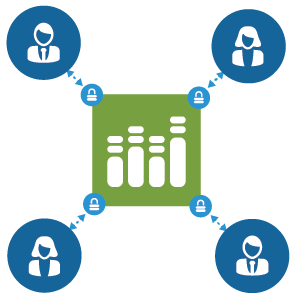
A key component of effective clinical data management is the ability to share reports and data with collaborators to improve research, innovation, and ultimately patient care. Maintaining compliance and having the ability to quickly share data and reports is an important topic to tackle in clinical research where patient safety and care is the top priority.
LabKey Server improves reporting and collaboration by providing:
- Dynamic and static reporting tables and visualizations that can be shared as-needed
- Web-based access to a central platform for data sharing
- The ability to remove PHI fields or provide randomized IDs when sharing information with collaborators
With the right tools for clinical data management, research teams can eliminate data integration bottle necks and curate reliable datasets for analysis. Explore our example Longitudinal Study or Sign-up for a free trial to see how LabKey Server can help your team overcome these, and other common clinical research challenges.
Related Documentation
Read more about the features highlighted above on the LabKey Support Portal:
What Is Scientific Data Repository Software?

For researchers, clinical data management and reporting has historically included manual curation and compilation of datasets from disparate data warehouses. In today’s data-rich environment, manual processing and integration is becoming more and more of a bottleneck.
In order to keep up with the increasing amount of data collected from clinical research, clinicians and statisticians alike need software tools that will centralize their data and help them quickly recognize errors. LabKey Server provides essential tools to overcome these, and other key clinical research challenges including:
Maintaining Clinical Data Integrity
Having an accurate representation of clinical data helps transform discoveries and understanding into patient care and treatment. Centrally-housing data in a compliant environment that enforces data standardization can help clinicians maintain excellent data integrity and provide an authoritative view of their data landscape.
LabKey Server helps maintain data integrity by providing:
- A highly structured data environment with enforceable data fields to ensure data is entered correctly and within range
- Quality control measures such as data flags, QC of datasets and built-in QC reports
- Role and group-based permission levels that allow users only access to what they need access to
- A compliance module, the allows users to set PHI securities, set Terms of Use for users, and provide electronic signatures on data snapshots
Integration of Data from Multiple Sources
Bringing together data from disparate sources into a single system can help clinical research stay on track and on time. Collaborative monitoring of data quality by clinicians, statisticians, and scientists enables quick identification of erroneous data and ensures a reliable, integrated data landscape for comprehensive data analysis.
LabKey Server helps facilitate comprehensive data integration by providing:
- Management of lab data together with clinical data in a single system
- A study module that can recognize and integrate disparate vendor datasets
- Built-in and customizable integration with electronic data capture systems and case report forms
- A clinical document abstraction pipeline, which can extract valuable data from legacy documents
Secure Reporting and Collaboration
A key component of effective clinical data management is the ability to share reports and data with collaborators to improve research, innovation, and ultimately patient care. Maintaining compliance and having the ability to quickly share data and reports is an important topic to tackle in clinical research where patient safety and care is the top priority.
LabKey Server improves reporting and collaboration by providing:
- Dynamic and static reporting tables and visualizations that can be shared as-needed
- Web-based access to a central platform for data sharing
- The ability to remove PHI fields or provide randomized IDs when sharing information with collaborators
With the right tools for clinical data management, research teams can eliminate data integration bottle necks and curate reliable datasets for analysis. Explore our example Longitudinal Study or Sign-up for a free trial to see how LabKey Server can help your team overcome these, and other common clinical research challenges.
Related Documentation
Read more about the features highlighted above on the LabKey Support Portal:
Integrating Lab Instruments With LIMS Without Surprises: A Scope-First Approach

For researchers, clinical data management and reporting has historically included manual curation and compilation of datasets from disparate data warehouses. In today’s data-rich environment, manual processing and integration is becoming more and more of a bottleneck.
In order to keep up with the increasing amount of data collected from clinical research, clinicians and statisticians alike need software tools that will centralize their data and help them quickly recognize errors. LabKey Server provides essential tools to overcome these, and other key clinical research challenges including:
Maintaining Clinical Data Integrity
Having an accurate representation of clinical data helps transform discoveries and understanding into patient care and treatment. Centrally-housing data in a compliant environment that enforces data standardization can help clinicians maintain excellent data integrity and provide an authoritative view of their data landscape.
LabKey Server helps maintain data integrity by providing:
- A highly structured data environment with enforceable data fields to ensure data is entered correctly and within range
- Quality control measures such as data flags, QC of datasets and built-in QC reports
- Role and group-based permission levels that allow users only access to what they need access to
- A compliance module, the allows users to set PHI securities, set Terms of Use for users, and provide electronic signatures on data snapshots
Integration of Data from Multiple Sources
Bringing together data from disparate sources into a single system can help clinical research stay on track and on time. Collaborative monitoring of data quality by clinicians, statisticians, and scientists enables quick identification of erroneous data and ensures a reliable, integrated data landscape for comprehensive data analysis.
LabKey Server helps facilitate comprehensive data integration by providing:
- Management of lab data together with clinical data in a single system
- A study module that can recognize and integrate disparate vendor datasets
- Built-in and customizable integration with electronic data capture systems and case report forms
- A clinical document abstraction pipeline, which can extract valuable data from legacy documents
Secure Reporting and Collaboration
A key component of effective clinical data management is the ability to share reports and data with collaborators to improve research, innovation, and ultimately patient care. Maintaining compliance and having the ability to quickly share data and reports is an important topic to tackle in clinical research where patient safety and care is the top priority.
LabKey Server improves reporting and collaboration by providing:
- Dynamic and static reporting tables and visualizations that can be shared as-needed
- Web-based access to a central platform for data sharing
- The ability to remove PHI fields or provide randomized IDs when sharing information with collaborators
With the right tools for clinical data management, research teams can eliminate data integration bottle necks and curate reliable datasets for analysis. Explore our example Longitudinal Study or Sign-up for a free trial to see how LabKey Server can help your team overcome these, and other common clinical research challenges.
Related Documentation
Read more about the features highlighted above on the LabKey Support Portal:
Why Integrated Digital Lab Notebook Software Outperforms Standalone ELNs

For researchers, clinical data management and reporting has historically included manual curation and compilation of datasets from disparate data warehouses. In today’s data-rich environment, manual processing and integration is becoming more and more of a bottleneck.
In order to keep up with the increasing amount of data collected from clinical research, clinicians and statisticians alike need software tools that will centralize their data and help them quickly recognize errors. LabKey Server provides essential tools to overcome these, and other key clinical research challenges including:
Maintaining Clinical Data Integrity
Having an accurate representation of clinical data helps transform discoveries and understanding into patient care and treatment. Centrally-housing data in a compliant environment that enforces data standardization can help clinicians maintain excellent data integrity and provide an authoritative view of their data landscape.
LabKey Server helps maintain data integrity by providing:
- A highly structured data environment with enforceable data fields to ensure data is entered correctly and within range
- Quality control measures such as data flags, QC of datasets and built-in QC reports
- Role and group-based permission levels that allow users only access to what they need access to
- A compliance module, the allows users to set PHI securities, set Terms of Use for users, and provide electronic signatures on data snapshots
Integration of Data from Multiple Sources
Bringing together data from disparate sources into a single system can help clinical research stay on track and on time. Collaborative monitoring of data quality by clinicians, statisticians, and scientists enables quick identification of erroneous data and ensures a reliable, integrated data landscape for comprehensive data analysis.
LabKey Server helps facilitate comprehensive data integration by providing:
- Management of lab data together with clinical data in a single system
- A study module that can recognize and integrate disparate vendor datasets
- Built-in and customizable integration with electronic data capture systems and case report forms
- A clinical document abstraction pipeline, which can extract valuable data from legacy documents
Secure Reporting and Collaboration
A key component of effective clinical data management is the ability to share reports and data with collaborators to improve research, innovation, and ultimately patient care. Maintaining compliance and having the ability to quickly share data and reports is an important topic to tackle in clinical research where patient safety and care is the top priority.
LabKey Server improves reporting and collaboration by providing:
- Dynamic and static reporting tables and visualizations that can be shared as-needed
- Web-based access to a central platform for data sharing
- The ability to remove PHI fields or provide randomized IDs when sharing information with collaborators
With the right tools for clinical data management, research teams can eliminate data integration bottle necks and curate reliable datasets for analysis. Explore our example Longitudinal Study or Sign-up for a free trial to see how LabKey Server can help your team overcome these, and other common clinical research challenges.
Related Documentation
Read more about the features highlighted above on the LabKey Support Portal: