What’s New in LabKey Server 21.3

LabKey Server

  • Ontologies Integration – Control vocabularies and semantics using ontology integration.
    • Browse the concepts in your ontologies and add concept annotations to data. 
    • Use an Ontology Lookup to map entered information to preferred vocabularies.
    • Additional SQL functions and annotations.
  • Option to merge changes when importing dataset data. (Also available in 20.11.3)
  • Dataset audit logs provide a detailed view of what data has changed
  • New Assay Type Selection Interface – Simplified method for selecting a Standard assay (recommended and most common), vs. one of the Specialty assays. 

Sample Manager

  • Freezer management has been added to Sample Manager. Key features include:
    • Match digital storage to physical storage in your lab with configurable freezers.
    • Easily store and locate samples from anywhere in the application. 
    • Track locations and chain of custody of samples. 
    • Check in and out, record amount used, and increment freeze/thaw counts. 
    • Easily migrate from another system by importing sample data simultaneously with location data
  • Improved sample import includes removal of previous size limits on data import, background sample imports, and in-app notifications when background imports complete.

Biologics

Premium Resources Highlights

Release Notes

See the full Release Notes 21.3 (March 2021)

FDA MyStudies for Decentralized Clinical Trials

Decentralized clinical trials (DCTs) expand options for trial participation by populations who are unable to leave their homes as easily or frequently as is required for traditional clinical trials. They can also help clinical trials do a more thorough job of accessing diverse populations by reducing geographical barriers, increasing trial enrollment, and improving retention. DCTs can also assist in capturing participant-centric data outside of the medical setting such as medication adherence, exercise, quality-of-life metrics, and other pertinent data. Although decentralized clinical trials have recently taken the spotlight as a remedy to challenges brought on by the COVID-19 pandemic, they will likely continue to be a widely used tool in clinical trial studies. 

Mobile Apps for Decentralized Clinical Trials

Mobile apps in particular have the potential to increase the efficiency and reach of prospective studies. One notable example is FDA MyStudies. The FDACOVID MyStudies selected Harvard Pilgrim Health Care Institute (HPHCI) to lead the development of this mobile application to facilitate the collection of real-world data directly from patients to support decentralized clinical trials, observational studies, and registries. Harvard Pilgrim selected LabKey as their development partner tasked with building a secure back-end storage environment for collected data. LabKey was selected due to the platform’s flexible, science-specific architecture. With the project’s long-term goal of expanding the use of real-world data across research programs, the application framework needed to support a broad range of potential healthcare topics through configuration as opposed to requiring development for each new project. LabKey Server also stood out as an ideal solution because of the platform’s ability to handle PHI/PII data in a manner compliant with HIPAA and FISMA regulations. 

The primary goal of the project was to build an open-source reusable platform consisting of a mobile device application and patient data storage environment that fulfills the FDA’s regulatory needs regarding data security and traceability. Creating a platform that meets regulatory data security and privacy standards while remaining extensible to different types of studies and patient cohorts was central to the requirements and design of the platform. The FDA MyStudies platform can be used and rebranded for studies in other various therapeutic areas and has most recently been modified to enable contactless patient informed consent during the COVID-19 pandemic.

For more information on FDA MyStudies for decentralized clinical trials, please see below:

FDA MyStudies Case Study

Publication: The FDA MyStudies app: a reusable platform for distributed clinical trials and real-world evidence studies

LabKey Supports for NIAID COVID-19 Immune Response Consortium

Since the start of the COVID-19 pandemic, the urgent need to gather, harmonize and share data has been felt across the scientific research community. To meet this demand, the NIAID Immune Response Consortium developed the HGRepo Informatics Framework in partnership with LabKey. This informatics system centralizes unstructured and de-identified clinical data collected from 14 domestic and international hospital sites. Researchers are using this data to study host genetics, host response, and microbial genetics as they relate to COVID-19. Downstream data from their research includes gene expression data, single-cell multi-omics data, humoral signature data, serology and more. 

Support from LabKey

LabKey supports NIAID by providing a platform to link all of the generated data back to the original clinical, demographics, and phenotype data. By helping integrate, track and make data accessible for collaborative research and integrated analysis, LabKey is helping researchers to quickly get the most insight from the consortium research data. In short, LabKey Server provided a central data repository to provide standardization and structure to clinical data including:

  • Definition of Dataset and Sample Properties
  • Controlled Vocabularies 
  • Categorical Data Groupings
  • Reports and Views
  • Automated update of links to Assay Data
  • Calculated timeline durations for samples
  • NIH SAML Authentication
  • Folder & Role Permissions

Watch the HGRepo Presentation at LKUC 2020

At the 2020 LabKey User Conference,  Sandhya Xirasagar Ph.D., Lead, Clinical and Laboratory Informatics Section with NIAID and  Jason Barnett, Contract Lead, Medical Science and Computing, Inc. presented on the HGRepo Informatics Framework. Their presentation covers the informatics framework including the background and requirements for the scientific data management system, a demo of HGRepo and the future vision for the system. Watch below:

Managing ELISA and ELISpot Data with LabKey Server SDMS

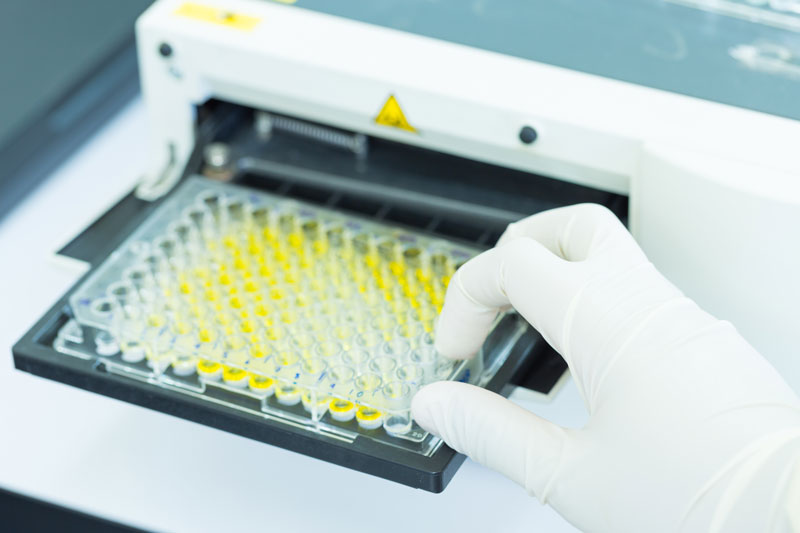
High throughput plate-based immunoassays such as ELISA and ELISpot are important tools in drug discovery, clinical trials, bioanalytical labs and immunological research. With the advancement of these assays into microplates and their relatively inexpensive nature, both of these assays are widely used globally to evaluate immune responses to a variety of antigens.

Because of their low price point and technology requirements, ELISA and ELISpot assays are often performed in a high-throughput manner which produces a large amount of data in a short time frame. To support the reproducibility of experiment results, teams need lab data management tools that are scalable enough to manage this high volume data in a controlled manner without causing research bottlenecks. LabKey Server provides support for efficient ELISA and ELISpot data management by:

Streamlining Data Management in the Laboratory

LabKey Server helps streamline the management of immunoassay and other laboratory data by:

  • Automatically importing instrument files upon availability using LabKey file watchers
  • Providing automated cleaning, validation, and transformation of data from laboratory instruments, databases and software
  • Structuring experiment results in data grids that can easily be sorted, filtered, and queried

Tracking Data Provenance

LabKey provides scientists with mechanisms for capturing data provenance by:

  • Offering users easy-to-understand graphical plate mapping tools
  • Allowing users to add metadata about the antigen or immune-responder
  • Providing the ability to calculate background and normalize data when appropriate
  • Visualizing calibration curves or normalized spot counts for dependable analysis

Facilitating Lab Data Integration & Analysis

LabKey helps scientists integrate, analyze and share their ELISA and ELISpot data by:

  • Allowing users to easily integrate their plate-based data with other related data
  • Providing built-in visualization tools for live or snapshotted analyses
  • Offering a mature permissions strategy for securely sharing data and analyses with collaborators

LabKey Server helps research teams efficiently manage lab data at scale.


Click here to request a demo.

Browse the Human Immune System with HIPC’s ImmuneSpace Powered by LabKey

Browse Human Immune System Data

The Human Immunology Project Consortium (HIPC) program was established by the NIAID Division of Allergy, Immunology, and Transplantation (DAIT) as part of the overall NIAID focus on human immunology. To support the data management, analysis, and research efforts of HIPC, ImmuneSpace was developed. This project is led by Dr. Gottardo of the Fred Hutchinson Cancer Research Center. 

Immune system related data, collected from over 100 studies at HIPC research centers, is available to the public in ImmuneSpace, developed in collaboration with LabKey. Well-characterized human cohorts are studied using a wide variety of tools including:

  • Multiplex transcriptional, cytokine, and proteomic assays
  • Multiparameter phenotyping of leukocyte subsets
  • Assessment of leukocyte functional status

LabKey Server Support for HIPC

LabKey Server provides the underlying system to centralize data for securely publishing, aligning, and harmonizing datasets across what would otherwise be siloed study repositories. Shared datasets and extensible schemas help bring diverse data together in a way that it can be treated as a global data bank.

The research network data centralization solution offered by LabKey server is specifically designed to: 

  • Bring together data from disparate studies, making the data centrally available 
  • Align data structures to minimize manual processing and facilitate integration
  • Provide quality control tools to validate and standardize data from contributors
  • Create secure workspaces to curate data prior to sharing with a wider audience
  • Facilitate exploration and analysis of of complete integrated datasets
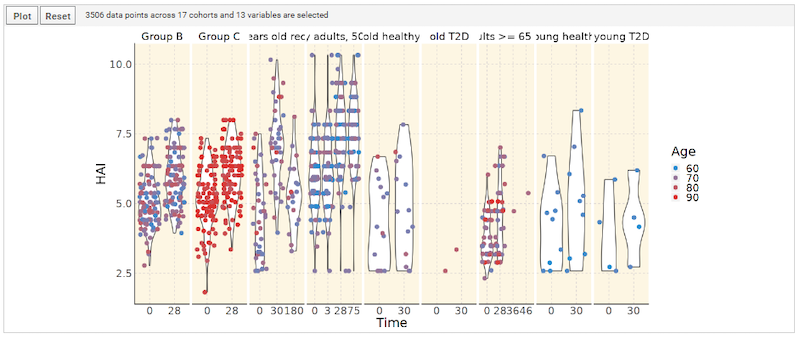
  • Visualize, analyze, and report on aggregated data using built-in plotting and reporting tools. For example, LabKey Server’s powerful integration with the R statistical programming environment supports presenting R script results as live reports within LabKey Server.

Explore the new HIPC Interface

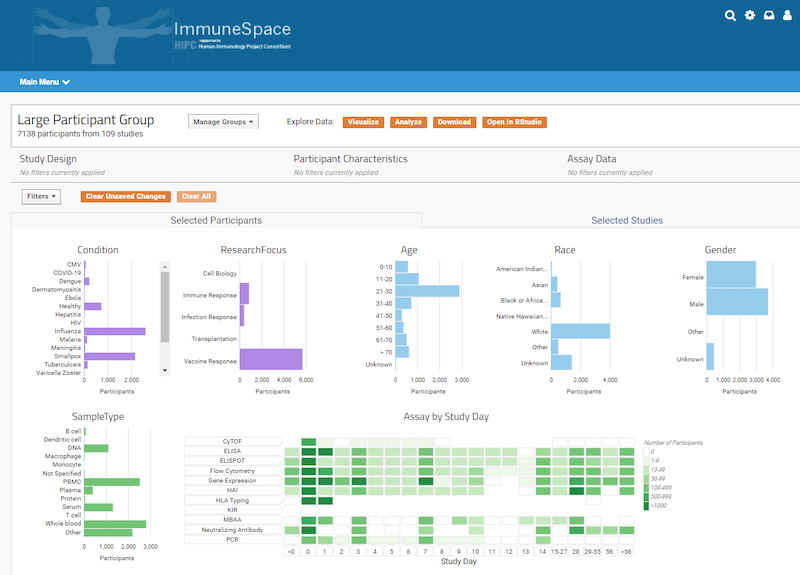
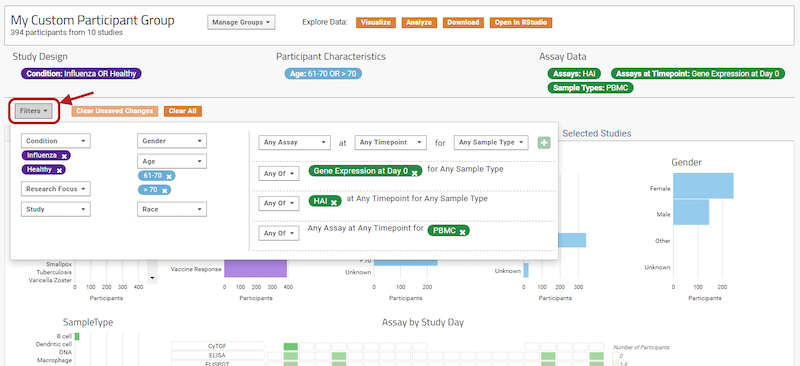
The ImmuneSpace platform recently launched a new Data Finder interface which makes it easy for users to explore and analyze datasets from hundreds of studies. Developed in ReactJS, with consulting support from LabKey developers and designers, plus extensions to the APIs, this modern interface presents an intuitive browsing experience. LabKey’s integrations with analysis and visualization tools including RStudio help power unique solutions like the ImmuneSpace DataFinder. 


Filter by patient characteristics, study focus, and even by the type and timeframe of data available. Dashboard graphics update in real time to guide you as you make selections.

HIPC Data


Identify your own cross-study participant group of interest and save it for deeper analysis.  Use the group as a basis for visualizations and analysis.


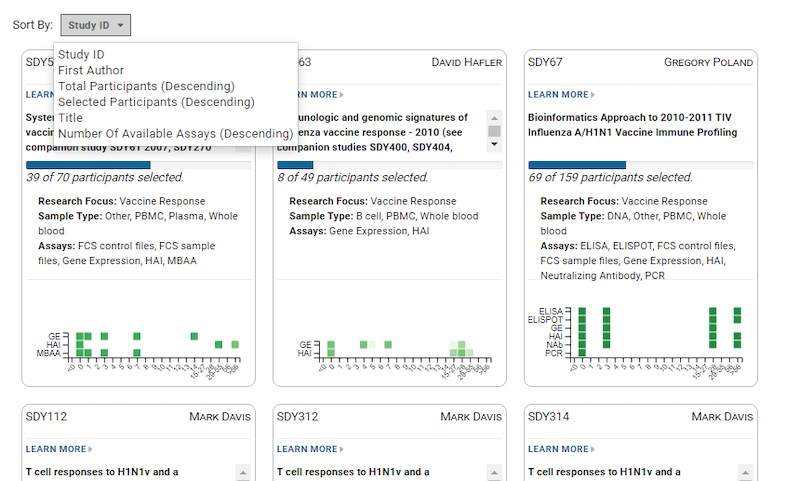
Investigating hypotheses across this existing landscape of collected data can unlock new insights for future study and help you connect with research similar to your own. Filtered study details can be scanned in a card format, or sorted in any way you choose.


Click Here to get started by registering for a free account.

FDA releases COVID MyStudies with support from Harvard Pilgrim Healthcare Institute and LabKey

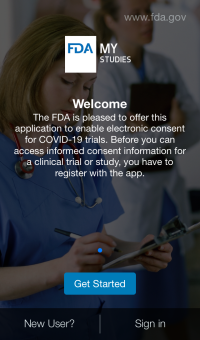
Previously released as FDA MyStudies, COVID MyStudies is now available as a free platform to assist investigators in remotely and securely obtaining informed consent from patients for eligible clinical trials when face-to-face contact is not possible due to COVID-19 control measures.

COVID MyStudies

“The agency is providing this resource after hearing that investigators were having difficulties obtaining informed consent for clinical trials when patients were in isolation rooms in health care facilities or could not travel to outpatient clinics,” noted the FDA. By obtaining consent from patients remotely, COVID MyStudies can help ensure that clinical trials related to COVID-19 are not unnecessarily delayed.

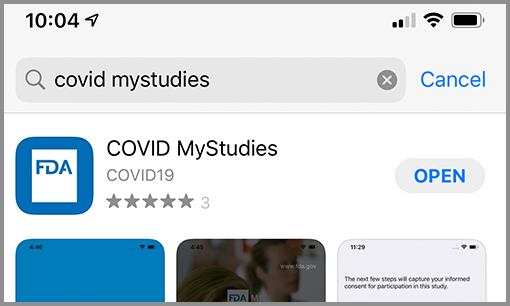
COVID MyStudies is available on the Apple App and Google Play stores. 

Before using the app, investigators must contact the FDA. If a pre-IND or IND number is available, it should be included in the preliminary contact email. Investigators will provide their informed consent documents to the COVID MyStudies team to be added to the app. They will then have a chance to review all informed consent documentation within the app before incorporating it into their trials.

LabKey for COVID MyStudies

Harvard Pilgrim Health Care Institute (HPHCI) was selected by the FDA to lead the development of the FDA MyStudies mobile app. HPHCI in turn selected LabKey Server as the supporting data management solution and Boston Technology Corporation (BTC) as the developer of the mobile interface.

The flexible architecture of LabKey Server and its ability to handle PHI/PII data in a manner compliant with HIPAA and FISMA regulations leant itself well to the COVID MyStudies project. The Registration Server utilized to manage electronic consent, authentication, preferences, and notifications, is built upon the LabKey Server platform.  LabKey also provided the HIPAA/FISMA hosting environment for the application. You can learn more about how LabKey supported the FDA MyStudies app by reading our case study.

Related Resources

COVID MyStudies Support Documentation – LabKey

COVID MyStudies Announcement – FDA

Contact the support team at FDAMyStudiesContact@harvardpilgrim.org

Contact FDA at CDERMedicalPolicy-RealWorldEvidence@fda.gov

Data Management for Translational Research

Data Management in translational research is key to gleaning insights that lead to personalized treatment plans for patients. Translational research has advanced rapidly in recent years, but patient treatment efforts have been hindered by poor data management practices, error-prone manual workflows, and a lack of collaborative spaces where scientists and clinicians can easily share data and analyses.

With the multitude of data sources and types involved in translational research, teams need flexible data management software tools to help maximize insights and knowledge transfer from bench to bedside. LabKey Server provides the essential tools to overcome the unique data management and collaboration challenges posed by interlinking data from research and patient treatment.

Managing Translational Research Data

Managing translational research data

Proper lab data management in translational research is vital in improving repeatability and reproducibility in experiments. This ultimately leads to more reliable research studies, improved product development and better patient outcomes in a shorter time frame. Data management software plays a central role in managing the integration, quality control, analysis, and sharing of translational research data. In LabKey Server, these features include:

  • The ability to seamlessly connect raw assay data with metadata and the original experiment
  • Built-in quality control tools for recognizing and handling erroneous values
  • A file watcher that automatically loads new data into a new or existing dataset as it becomes available, reducing human interaction and error
  • Compliance tools for ensuring data is reviewed and an electronic signature recorded

Comprehensive Data Integration
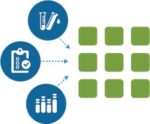
Data integration for translational research

Translational research involves many scientists and clinicians compiling multiple data types and sources. These may include deidentified patient data, whole genome or exome sequences, specific tumor sequences, specimen records from patient blood draws, biopsies, and more. Without a data integration hub, this is a daunting and time-consuming process that can potentially slow down research and the downstream treatment offered to patients.  LabKey Server includes these powerful features for integrating translational research data:

  • A compliant study environment with tools that simplify the integration of clinical and research data
  • Automated methods for aligning data from a variety of sources (flow cytometry, Luminex, antibody data, data from electronic data capture systems, etc.)
  • Flexibility and simplified methods for collecting ad-hoc results
  • Tools for comparing subjects across multiple studies

Collaboration and Sharing of Research Data
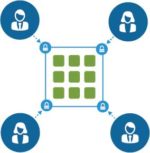
Collaboration and sharing of translational research data

Sharing data with collaborators improves accountability, innovation, and ultimately the production of new therapies for patients. Hurdles like institutional firewalls and outdated data-sharing methods, like emails, spreadsheets and insecure websites, often hinder collaboration in the scientific community. LabKey Server helps teams collaborate securely by providing:

  • Web-based access to a central platform for data sharing
  • A compliant environment with multi-level permissions, so data sharing is secure
  • The ability to protect PHI data or randomize IDs when sharing information with collaborators

Case Study: City of Hope

City of Hope is a comprehensive cancer care center treating patients using the Total Cancer Care protocol. LabKey Server brings together clinical and genomic data, making it available across the entire City of Hope enterprise where it can be used to improve precision-based therapies. LabKey Server integrated with their existing data warehouse systems, provided users with graphical access to querying and reporting, as well as API access for developers and users performing more advanced analysis techniques. LabKey also supports City of Hope’s needs for team collaboration solutions, API development, and workflow integration, with an audit system that supports regulatory compliance. 

Read More: LabKey Improves Data Accessibility for Total Cancer Care Protocol at City of Hope

Related Documentation
LabKey Open Research Portal for COVID-19 Research Studies

Researchers focusing on COVID-19 are using the LabKey Open Research portal to collaborate and share study data. Teams from the Dave O’Connor and Tom Friedrich labs at the University of Wisconsin have started “The CoVen”– a collaboration and data sharing initiative for researchers across a variety of institutions studying the SARS-CoV-2 virus. The diverse data shared in the portal is derived from both human clinical samples and nonhuman primate models. The CoVen teams are contributing to COVID-19 research by focusing on the following key areas:

  • Collaboration on nonhuman primate research studies of the virus. 

Since SARS-CoV-2 causes respiratory disease in infected rhesus macaques and other nonhuman primates, they are a useful animal model for COVID-19.  This includes developing and sharing a Clinical Scoring System and Lab Value Reference Guide to help maintain data consistency across future nonhuman primate COVID-19 studies. Information on animal model development and links to COVID-19 animal model preprints are also made available for reference and exploration

  • Conducting longitudinal viral genome sequencing from human isolates to understand virus evolution.

Viral RNA sequencing from human isolates gives insight into the transmission chain from person to person, and how it differs from city to city.

  • Optimizing assays for virus and antibody detection in nonhuman primate and human clinical samples. 

The development of assays to rapidly detect infections is essential in curtailing the pandemic. The O’Connor Lab is developing assays to detect COVID-19 viral nucleic acids in swab samples to detect current infections, as well as detect antibodies targeting SARS-CoV-2 in serology samples to determine if someone has been previously exposed and mounted an immune response.

LabKey Open Research Portal for COVID-19 Collaboration

Built using LabKey Server, the LabKey Open Research portal helps CoVen researchers directly coordinate with collaborators to post real-time updates and monitor the progress of ongoing studies. The portal provides a platform that facilitates communication, data uploads, and efficient tracking of updates. These real-time updates allow the CoVen team to fine tune study designs and discuss future directions of studies based on data from each site.

By sharing real-time study updates on the portal, research teams from around the world have accessed the data. This has facilitated further collaboration and helped the CoVen team to learn from other research studies, share and develop standardized clinical scoring criteria, PET/CT imaging techniques, virological and immunological assays, and study designs.

Open Research Portal projects are freely available to researchers. If you are interested in sharing real-time data through the portal, please contact us.

Tutorials: LabKey Server SDMS for Research Studies

The LabKey Server platform can be easily configured to manage longitudinal study data allowing for efficient curation, analysis and publishing. These features include data integration, a customizable study framework, quality control workflows, an intuitive visualization builder, manuscript development tools, and de-identified data publishing. 

To help users configure LabKey server to their study data needs as well as to help those evaluating LabKey, we have put together a series of tutorials. You can also try LabKey server using these resources:

>Explore an Example Research Study 

>Start a Trial of LabKey Server

>Design Your Own Study

Research Studies with LabKey Server 

Interactive Data Grids
The LabKey platform provides a graphical user interface to import, query and analyze your research data. Learn how easy it is to chart, correlate, and drill down into your data in this quick online tour.

Time Chart Visualizations
Visually presenting research data in a way that your users can easily answer their own questions can bring your results to life. In a LabKey time chart, the user can change how the underlying data is shown while the live underlying data updates continuously behind the scenes.  In this visualization you can experiment by checking the grouping boxes of the time chart. If you click ‘Edit’ and then ‘Chart Type’ you can access the Plot and Chart Builder to see other data in other ways.

Plot and Chart Builder
In the common plot editor, you can change the type and layout of a chart. On this example, click ‘Chart Type’ to select another plot type, change what data is shown using drag and drop, and use color and shape to add more information. To learn more about building meaningful visualizations within a study see this tutorial- Tutorial: Longitudinal Studies

Quality Control
Tracking the quality of data involves various control measures. LabKey studies can integrate QC status and easily filter to identify approved data as well as data that is in need of further attention. You can see a filtered set of data that has not yet been reviewed by clicking here.

Secure Access
Sharing reports and data with collaborators improves research, innovation, and ultimately patient care.  Protecting the same information from outside access is vital in maintaining patient privacy. Using a trial server, you can use this tutorial to create a working model to see how role and group based access works.

LabKey Supports Total Cancer Care Protocol at City of Hope

City of Hope LogoPrecision medicine for the treatment of cancer involves integrating, aligning and providing access to a multitude of data types. This includes patient data, whole genome or exome sequences, specific tumor sequences, specimen records from dozens of blood draws, biopsies, and more. A recently published case study outlines how LabKey Server provides data integration, analysis and collaboration tools to City of Hope as they treat patients using the Total Cancer Care Protocol. Working within the Oncology Research Information Exchange Network (ORIEN) consortium, the goal of this project is to bring together clinical and genomic data, making it available across the entire City of Hope enterprise where it can be used to improve precision-based therapies.

LabKey at City of Hope

LabKey Server integrates with existing data warehouse systems at City of Hope, provides users with graphical access to querying and reporting, as well as API access for developers and users performing more advanced analysis techniques. There are two main components to how City of Hope is using LabKey Server:

  1. Data aggregation from disparate sources and alignment with patient information
  2. Management of the workflow process itself, including automated import and scripted transformation of data.

More than just a software vendor, LabKey also supports City of Hope’s needs for team collaboration solutions, API development, and workflow integration, with an audit system that supports regulatory compliance. Looking ahead, LabKey solutions offer the expansion and flexibility required for scaling the City of Hope and ORIEN networks into broader use.

Additional Information

Case Study: LabKey Server at City of Hope

LabKey User Conference Presentation: Watch Video

Request a demo of LabKey Server