
What is High-Throughput Screening?

For researchers, clinical data management and reporting has historically included manual curation and compilation of datasets from disparate data warehouses. In today’s data-rich environment, manual processing and integration is becoming more and more of a bottleneck.

In order to keep up with the increasing amount of data collected from clinical research, clinicians and statisticians alike need software tools that will centralize their data and help them quickly recognize errors. LabKey Server provides essential tools to overcome these, and other key clinical research challenges including:

LabKey server maintains clinical data integrity for clinical research.

Maintaining Clinical Data Integrity

Having an accurate representation of clinical data helps transform discoveries and understanding into patient care and treatment. Centrally-housing data in a compliant environment that enforces data standardization can help clinicians maintain excellent data integrity and provide an authoritative view of their data landscape.

LabKey Server helps maintain data integrity by providing:

  • A highly structured data environment with enforceable data fields to ensure data is entered correctly and within range
  • Quality control measures such as data flags, QC of datasets and built-in QC reports
  • Role and group-based permission levels that allow users only access to what they need access to
  • A compliance module, the allows users to set PHI securities, set Terms of Use for users, and provide electronic signatures on data snapshots

LabKey Server for integrating clinical research dataIntegration of Data from Multiple Sources

Bringing together data from disparate sources into a single system can help clinical research stay on track and on time. Collaborative monitoring of data quality by clinicians, statisticians, and scientists enables quick identification of erroneous data and ensures a reliable, integrated data landscape for comprehensive data analysis.

LabKey Server helps facilitate comprehensive data integration by providing:

  • Management of lab data together with clinical data in a single system
  • A study module that can recognize and integrate disparate vendor datasets
  • Built-in and customizable integration with electronic data capture systems and case report forms
  • A clinical document abstraction pipeline, which can extract valuable data from legacy documents
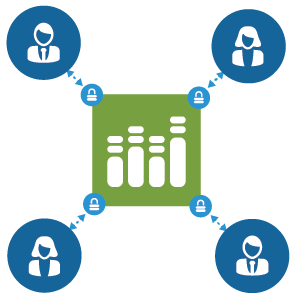
LabKey Server for secure reporting and collaboration in clinical researchSecure Reporting and Collaboration

A key component of effective clinical data management is the ability to share reports and data with collaborators to improve research, innovation, and ultimately patient care. Maintaining compliance and having the ability to quickly share data and reports is an important topic to tackle in clinical research where patient safety and care is the top priority.

LabKey Server improves reporting and collaboration by providing:

  • Dynamic and static reporting tables and visualizations that can be shared as-needed
  • Web-based access to a central platform for data sharing
  • The ability to remove PHI fields or provide randomized IDs when sharing information with collaborators

With the right tools for clinical data management, research teams can eliminate data integration bottle necks and curate reliable datasets for analysis. Explore our example Longitudinal Study or Sign-up for a free trial to see how LabKey Server can help your team overcome these, and other common clinical research challenges.

Related Documentation

Read more about the features highlighted above on the LabKey Support Portal:
How to Avoid Data Pitfalls in AI Drug Discovery

For researchers, clinical data management and reporting has historically included manual curation and compilation of datasets from disparate data warehouses. In today’s data-rich environment, manual processing and integration is becoming more and more of a bottleneck.

In order to keep up with the increasing amount of data collected from clinical research, clinicians and statisticians alike need software tools that will centralize their data and help them quickly recognize errors. LabKey Server provides essential tools to overcome these, and other key clinical research challenges including:

LabKey server maintains clinical data integrity for clinical research.

Maintaining Clinical Data Integrity

Having an accurate representation of clinical data helps transform discoveries and understanding into patient care and treatment. Centrally-housing data in a compliant environment that enforces data standardization can help clinicians maintain excellent data integrity and provide an authoritative view of their data landscape.

LabKey Server helps maintain data integrity by providing:

  • A highly structured data environment with enforceable data fields to ensure data is entered correctly and within range
  • Quality control measures such as data flags, QC of datasets and built-in QC reports
  • Role and group-based permission levels that allow users only access to what they need access to
  • A compliance module, the allows users to set PHI securities, set Terms of Use for users, and provide electronic signatures on data snapshots

LabKey Server for integrating clinical research dataIntegration of Data from Multiple Sources

Bringing together data from disparate sources into a single system can help clinical research stay on track and on time. Collaborative monitoring of data quality by clinicians, statisticians, and scientists enables quick identification of erroneous data and ensures a reliable, integrated data landscape for comprehensive data analysis.

LabKey Server helps facilitate comprehensive data integration by providing:

  • Management of lab data together with clinical data in a single system
  • A study module that can recognize and integrate disparate vendor datasets
  • Built-in and customizable integration with electronic data capture systems and case report forms
  • A clinical document abstraction pipeline, which can extract valuable data from legacy documents

LabKey Server for secure reporting and collaboration in clinical researchSecure Reporting and Collaboration

A key component of effective clinical data management is the ability to share reports and data with collaborators to improve research, innovation, and ultimately patient care. Maintaining compliance and having the ability to quickly share data and reports is an important topic to tackle in clinical research where patient safety and care is the top priority.

LabKey Server improves reporting and collaboration by providing:

  • Dynamic and static reporting tables and visualizations that can be shared as-needed
  • Web-based access to a central platform for data sharing
  • The ability to remove PHI fields or provide randomized IDs when sharing information with collaborators

With the right tools for clinical data management, research teams can eliminate data integration bottle necks and curate reliable datasets for analysis. Explore our example Longitudinal Study or Sign-up for a free trial to see how LabKey Server can help your team overcome these, and other common clinical research challenges.

Related Documentation

Read more about the features highlighted above on the LabKey Support Portal:

Basics of Drug Discovery Software for Early Stage Biotechs

For researchers, clinical data management and reporting has historically included manual curation and compilation of datasets from disparate data warehouses. In today’s data-rich environment, manual processing and integration is becoming more and more of a bottleneck.

In order to keep up with the increasing amount of data collected from clinical research, clinicians and statisticians alike need software tools that will centralize their data and help them quickly recognize errors. LabKey Server provides essential tools to overcome these, and other key clinical research challenges including:

LabKey server maintains clinical data integrity for clinical research.

Maintaining Clinical Data Integrity

Having an accurate representation of clinical data helps transform discoveries and understanding into patient care and treatment. Centrally-housing data in a compliant environment that enforces data standardization can help clinicians maintain excellent data integrity and provide an authoritative view of their data landscape.

LabKey Server helps maintain data integrity by providing:

  • A highly structured data environment with enforceable data fields to ensure data is entered correctly and within range
  • Quality control measures such as data flags, QC of datasets and built-in QC reports
  • Role and group-based permission levels that allow users only access to what they need access to
  • A compliance module, the allows users to set PHI securities, set Terms of Use for users, and provide electronic signatures on data snapshots

LabKey Server for integrating clinical research dataIntegration of Data from Multiple Sources

Bringing together data from disparate sources into a single system can help clinical research stay on track and on time. Collaborative monitoring of data quality by clinicians, statisticians, and scientists enables quick identification of erroneous data and ensures a reliable, integrated data landscape for comprehensive data analysis.

LabKey Server helps facilitate comprehensive data integration by providing:

  • Management of lab data together with clinical data in a single system
  • A study module that can recognize and integrate disparate vendor datasets
  • Built-in and customizable integration with electronic data capture systems and case report forms
  • A clinical document abstraction pipeline, which can extract valuable data from legacy documents

LabKey Server for secure reporting and collaboration in clinical researchSecure Reporting and Collaboration

A key component of effective clinical data management is the ability to share reports and data with collaborators to improve research, innovation, and ultimately patient care. Maintaining compliance and having the ability to quickly share data and reports is an important topic to tackle in clinical research where patient safety and care is the top priority.

LabKey Server improves reporting and collaboration by providing:

  • Dynamic and static reporting tables and visualizations that can be shared as-needed
  • Web-based access to a central platform for data sharing
  • The ability to remove PHI fields or provide randomized IDs when sharing information with collaborators

With the right tools for clinical data management, research teams can eliminate data integration bottle necks and curate reliable datasets for analysis. Explore our example Longitudinal Study or Sign-up for a free trial to see how LabKey Server can help your team overcome these, and other common clinical research challenges.

Related Documentation

Read more about the features highlighted above on the LabKey Support Portal:
NIH Data Management & Sharing Policy

The biologics development process is a data-driven endeavor. A vast amount of data is generated from many teams with the hopes of answering questions and informing decision-making along the way. Centralizing this data and their analyses across experiments amplifies the power and impact that data has on biologics research and development. 

Of course, centralizing biologics assay data means much more than simply storing data in the same place. Data centralization increases the value of biologics data beyond one particular experiment or result by defining data relationships. The ability to aggregate data across multiple samples, assays, and experiments, with metadata describing the relationship of all of these to each other, is where modern data science resides. Whereas the analysis of a single value from a single assay shows a distribution, joining that assay with others reveals a richer data landscape that is ripe for analysis. These data landscapes yield even more insights when they are related to one another across many controlled variables and conditions.

Below are more ways that implementing tools and strategies for data centralization can impact the speed and efficiency of biotherapeutic development. 

Data Integrity 

Having a single source of truth for data makes it easier for organizations to track how (and by whom) data is generated, accessed, and modified. With the assistance of a biologics data management application serving as a central hub-  permissions, auditing, and backups provide control over how, when, where, and by whom data is used. Centralization of data also encourages standardization of data formats across research teams. Standardizing data structures helps validate the data being entered and helps preserve the relationships between data. This leads to downstream efficiency and maximizes the utility of experiments beyond the individual or team from which it was derived. 

Collaboration 

Centralizing biologics research data also helps promote collaboration between research teams. By storing data in one central location in standardized formats, scientists can easily find, compare and reference existing data in their research. A central repository for data also makes it much easier to see what data is missing or needed to inform decisions. Hand-offs of data are also made easier when all data is centrally stored. 

About our Biologics LIMS

LabKey Biologics provides researchers with a set of tools to centralize biological entity registration, workflow management, and data exploration. 

  • Bioregistry – Register and track molecular entities, nucleotide sequences, protein sequences, expression systems, constructs, vectors, and cell lines
  • Biologics Assay Management – Connect design data to related multi-dimensional assay results for a complete data landscape.
  • Biologics Workflow Manager – Centrally manage biologics development workflows to help your team collaborate
  • Electronic Lab Notebook – Highlight and connect your research entities and data with our biologics ELN

Click Here to take a tour of LabKey Biologics.

Does Your Biotech Startup Need a LIMS?

Antibody Development with LabKey Biologics

A key function of LabKey Biologics is assisting with antibody development and registration. Registration allows all data from antibody production processes to be associated with the candidate. It also allows for the optimization of processes at each stage of antibody development by facilitating the comparison of antibody experiment data.

Registering Antibodies and Components

To register antibodies, LabKey Biologics provides an easy-to-use Bioregistry. Users can add an antibody description, aliases, and details about the molecule’s lineage. Then, users select the components of this molecule, generally composed of one or more protein sequences, and finalize the stoichiometry. The Bioregistry verifies that this entity, defined by its components and their stoichiometry, has not previously been registered. 

Users can also register molecules in bulk through the user interface, or via API. This includes support for importing GenBank files.

Tracking Component Relationships

Antibody development typically utilizes an expression system to produce samples of a molecule and its variations. LabKey Biologics stores key physical characteristics about registered molecules and presents users with captured information about its components, with linkage to the expression system from which it is derived. The relationship between an expression system and its target molecule can be determined from the construct, media, and gene inserts used in the expression system. Users are able to import biologics assay data for samples derived from that expression system for comparison and deeper analytics. When a user registers a new expression system in LabKey Biologics, the application makes an explicit connection between it and the molecule of interest. This relationship is valuable for visualizing and navigating between the related expression system data and the molecule data.

Antibody Development Workflow 

Proper coordination of the multifaceted activities involved with antibody development is essential to ensure high quality results. Research managers must orchestrate all activities in their lab to facilitate communication, prevent bottlenecks, and prevent data from becoming siloed. LabKey Biologics provides a centralized system for managing ongoing research workflows and storing data generated across team members. This includes features to generate configurable work requests and track laboratory tasks. By maintaining the relationship between tasks and their resulting data LabKey Biologics ensures smooth handoffs and provides researchers with a holistic view of research operations and workflow progress. For example, a user can navigate from assay result data to the original request for it, facilitating operational visibility.

Additional Resources

LabKey biologics has features to assist researchers in nearly every stage of the biotherapeutic development pipeline. To learn more about LabKey Biologics, please explore the links below.

> Bioregistry
> Biologics Workflow Manager
> Biologics Assay Management
> Electronic Lab Notebook

To request a demo of LabKey Biologics, click here.

Integrating Benchling Data in LabKey at Inzen Therapeutics

At Inzen Therapeutics, the data science team uses LabKey Server as a one-stop-shop for data warehousing. Their goal is to help bench scientists quickly answer questions about their data. Through LabKey’s API, Inzen can access previous experiments and run downstream analyses on proteomics and phenotypic assay data. This enables Inzen to better understand the intercellular signals sent during execution of cell death programs, which they have termed “thanokine biology.”

Integrating Benchling Data with the LabKey API

Lab scientists at Inzen use Benchling, a suite of tools used for notebook management, molecular biology, and inventory tracking. It includes its own data warehouse, which contained the sample metadata. However, data scientists at Inzen use LabKey Server for other lab data management functions including storage of all omics data, metadata on measurements, hit lists from previous experiments and curated annotation sets. To help their scientists, Inzen knew they would have to integrate the Benchling data warehouse with LabKey to establish a single source of truth and develop core analytical pipelines. 

Watch the video below to learn how the data science team at Inzen integrated disparate data streams from Benchling and LabKey using the unified LabKey API.

Want to learn more? Request a Demo.

[vc_video link=”https://youtu.be/F4LfvSL4hAw”]